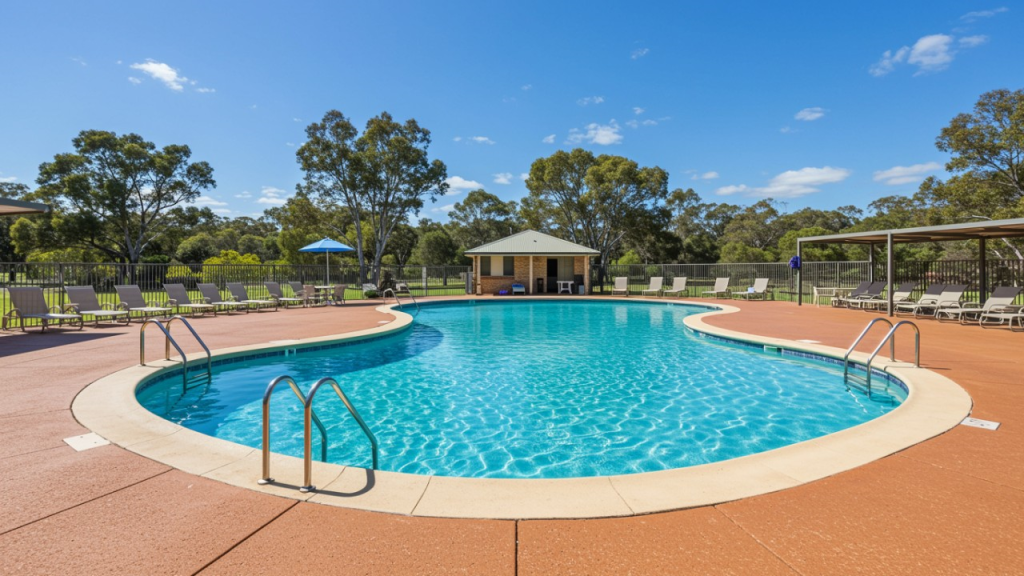
The beauty of a custom, free-form pool or an organically shaped garden lies in its unique curves and natural integration with the landscape. However, that beauty often comes with maintenance challenges, particularly when cleaning. Standard, rectangular approaches simply won’t work. To move beyond frustration and achieve pristine results in complex spaces, you need specialized techniques, targeted tools, and a systematic workflow. This ultimate guide breaks down how to efficiently clean and maintain every corner of your irregular pool and every edge of your winding garden beds.
Mastering Pool Coverage: The Cleaning Workflow
Cleaning a pool that lacks straight lines requires shifting your focus from linear patterns to zoned, systematic coverage. The biggest hurdle is ensuring the entire surface—floor, walls, steps, and coves—is reached, as debris tends to settle heavily in tight corners and sheltered pockets.
Begin with automation. The modern cordless pool vacuum is your primary workhorse. Unlike older, pressure-side models, intelligent robotic cleaners use advanced sensors and sophisticated algorithms that allow them to map non-standard shapes. They can often climb steep slopes and navigate tight radii better than manually driven equipment. For an irregular shape, run the robotic cleaner on its most comprehensive setting, perhaps twice if the pool is particularly convoluted, allowing the robot to learn and cover the challenging areas.
Next, focus on manual intervention where the robot cannot reach. This is often along the waterline, behind water features, and in deep steps. Use a stiff-bristled brush attached to a pole to scrub these specific areas. Brush the dislodged debris from the pockets towards the main circulation areas.
Finally, manage surface debris. For free-form pools, trees and surrounding landscaping often deposit leaves and pollen directly into the water. Ensure your pool skimmer baskets are clean and fully functional before starting any cleaning cycle. A clean skimmer maintains optimal flow, ensuring the water’s surface tension efficiently pulls floating debris into the filtration system. Supplement this with a long-handled hand skimmer, making deliberate passes in the sheltered, wind-stagnant corners where debris tends to accumulate and often bypasses the main skimmer opening.
Specialized Tools for Edge and Cove Cleaning
The difference between a clean pool and a sparkling pool often comes down to targeting the transition zones. Irregular pools frequently feature coves (tight corners where the floor meets the wall) and non-standard steps or benches that require specific tools.
Invest in a triangular or flexible brush head. Standard rectangular brushes are ineffective in tight, rounded coves. A flexible or triangular head conforms to the shape of the wall-to-floor transition, allowing bristles to reach into the debris traps where algae spores and grime cling. Similarly, switch from a standard leaf net to a fine-mesh bag net for scooping. Fine mesh captures the silt and dust that accumulates at the lowest point of the pool floor, particularly in the deep end of free-form designs. Using these specialized tools minimizes the physical strain of manual cleaning while dramatically improving debris removal.
Garden Bed Maintenance: Conquering Curves
The same systemic approach applies to gardens designed with curves and non-linear edges. The irregular garden’s challenge is less about cleaning and more about maintaining definition, especially when the garden meets the lawn.
The first strategy is defining and protecting your borders. The transition zone between lawn and mulch is where weeds and grass encroachment thrive. Use a half-moon edger or a dedicated stick edger to re-establish a crisp, clean line along every curve. This physical barrier prevents grass stolons (runners) from invading the mulch bed.
For weeding, the irregularity means you cannot simply run a large, wheeled cultivator. Instead, use precision tools like a hand trowel or a Japanese hori hori knife. These tools allow you to isolate and remove weeds from between closely planted shrubs or flowers in dense, curved beds without disturbing the established root systems of desired plants.
Watering and Pest Management in Complex Designs
Irregular gardens often feature a mix of sun exposure and microclimates, requiring nuanced watering and pest control strategies. In a linear garden, zones are often uniform; in a complex garden, a single zone might cover a sunny slope and a deeply shaded pocket, making even watering challenging.
This variability necessitates hand-testing the soil in different areas before turning on the water. Supplement your main system with drip irrigation lines that follow the curves, ensuring water is delivered directly to the root zone of plants in sheltered or densely packed areas.
Pest management must also be targeted. Instead of broad-spectrum applications, which are inefficient and unnecessary in smaller, complex beds, focus on scouting. Because the garden is defined by its intimacy with nature, pests are often localized. Inspect the undersides of leaves and the tips of new growth along the curves. If you find aphids on a single rose bush near a winding path, treat only that plant with a localized solution, preserving the beneficial insects elsewhere in the diverse landscape.
By combining autonomous technology like the cordless pool vacuum with specialized manual tools and strategic, zoned application of maintenance techniques, the irregular pool and garden cease to be maintenance nightmares. Instead, they become personalized spaces that are a pleasure to manage, ensuring they remain stunning focal points of your property with minimal effort.